







The short answer
If a worker can't fully understand a safety instruction — or can't comfortably speak up — the control isn't working, no matter how good the paperwork looks. Australian WHS laws require employers to give workers information and training they can understand and to consult them in ways that work for them. For multilingual blue-collar crews, that means showing, not just telling, using qualified interpreters for what matters, offering training in people's own language, and making it genuinely safe to speak up.
The reality on Australian sites
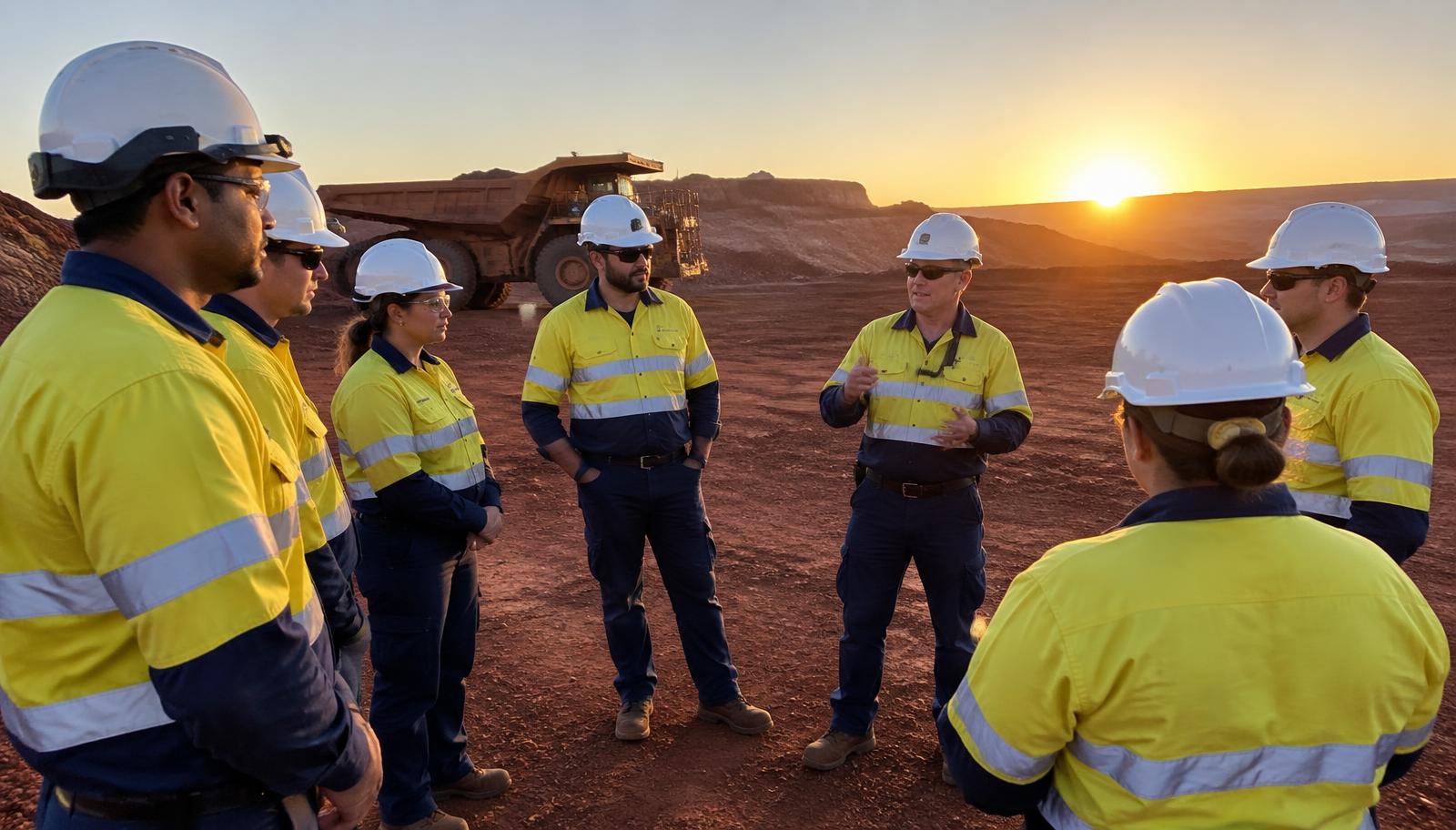
Walk onto a Pilbara mine, a Riverina packing shed, a Western Sydney construction site or a regional abattoir and you'll often hear several languages before smoko. The ABS 2021 Census found 27.6% of Australians were born overseas, and more than one in five speak a language other than English at home — most commonly Mandarin, Arabic, Vietnamese, Cantonese and Punjabi. Many of Australia's hardest, most hazardous jobs are done by migrants, seasonal workers and visa holders.
These are also the industries where mistakes cost the most. Safe Work Australia's key WHS statistics show most traumatic injury fatalities and serious compensation claims are concentrated in a small group of high-risk industries — the same industries that rely heavily on CALD and migrant workers. In a high-consequence task, a misunderstood instruction can matter immediately. Check the risks of the actual work, not just the industry's headline statistics.
A signature on an induction form proves someone was in the room. It doesn't prove they understood.
What the data says about CALD worker safety
This isn't a niche issue, and regulators no longer treat it as one. Four numbers frame the challenge:
27.6%
of Australians were born overseas
ABS 2021 Census
429
languages spoken across Australia, including 183 Indigenous languages
ABS 2021 Census
400+
serious workers' compensation claims lodged every day across Australia
Safe Work Australia, 2026
222
workers died from traumatic workplace injuries in 2025 — the highest annual toll since 2012
Safe Work Australia, 2026
Regulators are sounding the alarm
In October 2024, SafeWork NSW issued a safety alert after a rise in serious injuries to culturally and linguistically diverse workers. It names four groups most at risk of being hurt at work — CALD workers, migrant workers, labour hire workers and young workers — and warns that CALD and migrant workers are more likely to be harmed than other workers.
CALD workers are not one group
A 2026 study of Victorian emergency department data found occupational injury risk was higher among Sudanese and Afghan-born workers than Australian-born workers, but lower among workers born in China and India. The lesson: averages hide differences. Tailor safety programs community by community — and ask your own people what they need.
Why language becomes a safety — and psychosocial — risk
Most conversations about language focus on physical safety: a misread sign, a misheard instruction near moving plant. Those risks are real. But the quieter harm is psychosocial — and it's often what stops the physical risks being reported in the first place. Our poor support at work guide explains how gaps in guidance and access to help can leave people exposed.
Communication that closes the loop
Don't stop at “Do you understand?”
Show the task
Use the actual equipment, a clear visual and a demonstration of the critical control.
Listen to questions
Give people time and language support to explain what is unclear, without an audience or pressure.
Ask for show-back
Invite the worker to demonstrate the task and stop-work signal. Check the explanation, not the person.
Adjust together
If understanding is incomplete, change the explanation and check again before work starts.
Show-back is a practical comprehension check, not a complete competency assessment. Use the training, supervision and authorisation appropriate to the task.
Nodding isn't understanding
Workers who aren't confident in English often agree to avoid embarrassment or looking unfit for the job. A signed induction can hide a gap no one sees until something goes wrong.
Silence isn't safety
If raising a concern means struggling for words in front of a crew, many people won't. Near misses, bullying and fatigue go unreported — and the risk register looks cleaner than the site really is.
Insecurity amplifies everything
Temporary visas, labour hire and seasonal contracts can make people fear that complaining costs them work. That fear is itself a psychosocial hazard, and it multiplies every other one.
Isolation stacks up
Remote rosters, camps and long shifts away from family and community can leave workers with no one who speaks their language when they're struggling.
What Australian law expects
Under the model WHS laws, employers must provide the information, training, instruction and supervision workers need to work safely, and must consult workers who are, or are likely to be, affected by a safety matter. Safe Work Australia's consultation code of practice makes clear that consultation should take account of workers' language and literacy.
The model Code of Practice on psychosocial hazards adds a further layer: employers must identify and manage hazards such as poor support, low role clarity, isolated work and harassment — all of which are made worse when workers can't easily communicate. Victoria applies similar duties under its own OHS laws. In short: if your safety system only works in English, it may not meet the standard the law sets. See our psychosocial hazards guide for practical ways to change the conditions that create harm, rather than relying on training alone.
A national guide, with local duties
Model WHS laws take effect through each jurisdiction's legislation; Victoria uses its own OHS laws. Translation or interpreting may be appropriate, but there is no single rule that every conversation must use an interpreter. Choose support that fits your workers and the risks. WorkSafe Victoria's language communication code and Safe Work Australia's multicultural worker guidance provide practical starting points.
For jurisdiction-specific context, read our guides to psychosocial hazards in NSW workplaces and psychosocial hazards in Victorian workplaces.
Seven practical steps for multilingual crews
Know who you actually employ
Map the languages, literacy levels and employment types across every site and crew — including labour hire and contractors. You can't design for a workforce you haven't described.
Lead with show, not tell
Demonstrate tasks, use pictures, short video and plain English, and check understanding by asking workers to show you back — not by asking 'Do you understand?'
Use qualified interpreters for what matters
For inductions, incidents, investigations and wellbeing conversations, use professional interpreters (such as TIS National) rather than relying on a bilingual co-worker to carry the weight.
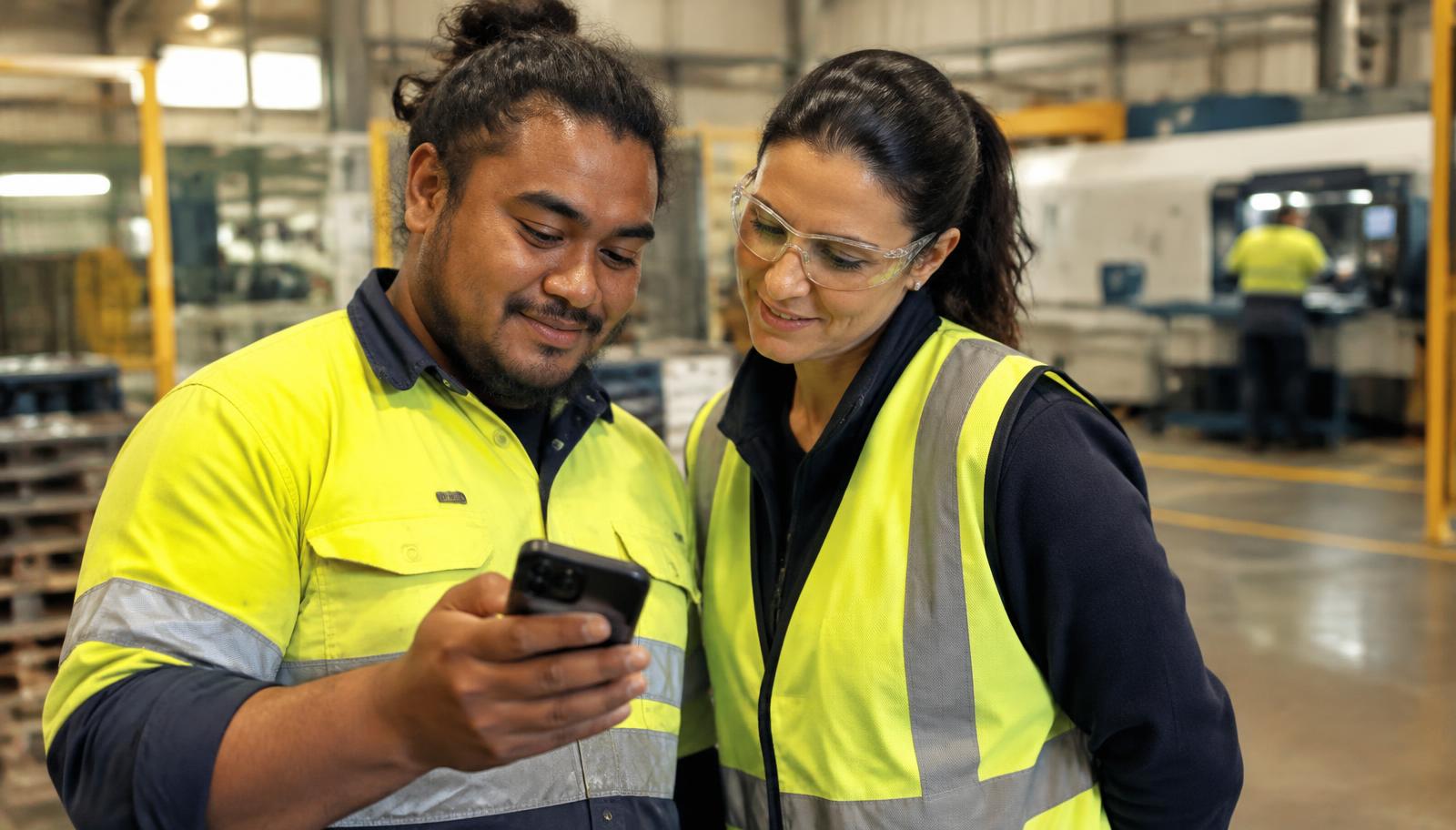
Use multilingual platforms where practical
Multilingual learning platforms such as Flourish360 can help deliver short, mobile, voice-first lessons in people's own language. Check that the languages, content and access options suit your actual crew. Combine digital learning with demonstrations, comprehension checks and suitable supervision — not as a replacement for them.
Make speaking up genuinely safe
Give several ways to raise concerns — anonymous where available, in language and verbally — and visibly act on what you hear. Explain workers' rights, how reports are handled and where independent help is available. Do not make promises about visa outcomes you cannot control.
Train supervisors as the bridge
Supervisors decide whether a worker feels safe to ask. Equip them to spot confusion, slow down, check in and escalate early.
Consult, record and review
Treat language and culture as a standing part of your psychosocial risk assessment. Consult workers, record what you changed and review it after incidents, complaints or workforce changes.
On site
What multilingual safety looks like in heavy industry
Language support needs to fit the work, not just the induction. These illustrative scenarios are not customer case studies or prescribed controls; use them to start a conversation with your people about the risks at your site.
Mining and FIFO crews
Where the gap appears
A contractor recognises a familiar task but does not understand a site-specific radio instruction. Away from home, they may also struggle to ask for support with fatigue or isolation.
A practical response
Practise the site's communication and escalation arrangements before the task. Confirm critical instructions with show-back, provide suitable language support and explain where workers can raise wellbeing concerns privately.
Check understanding: Can the worker demonstrate the agreed response and identify who to contact when something changes?
Explore the industry guideConstruction and subcontractors
Where the gap appears
A translated induction is completed on day one, but the work area, access route or subcontractor interface changes later. A worker misses the update delivered in a fast English-only pre-start.
A practical response
Use a marked-up site plan and a short demonstration at the work area. Include subcontractors in understandable briefings and check changes with individuals rather than relying on one person to relay everything.
Check understanding: Can each affected worker point out the changed area, exclusion zone and person responsible for the task?
Explore the industry guideAgriculture and seasonal teams
Where the gap appears
A seasonal worker arrives after the main induction. They understand routine picking instructions but are unsure how to report a hazard, ask about heat or raise an accommodation concern.
A practical response
Make induction available for every arrival, not just the first group. Explain breaks, emergency help and reporting in a form workers understand. Check privately whether labour-hire and seasonal workers can access the same support.
Check understanding: Does the worker know how to get help, and can they do so without needing permission from a crew intermediary?
Explore the industry guideManufacturing and processing
Where the gap appears
A worker memorises a production sequence without understanding why a safeguard matters. A changeover creates an unfamiliar condition, and production pressure makes asking a question feel difficult.
A practical response
Demonstrate the critical control and the point at which the task must stop. Explain changes using approved task information and suitable language support. Supervisors should make time for questions instead of treating silence as readiness.
Check understanding: Can the worker explain or show what to do when the normal sequence is interrupted?
Explore the industry guideTransport and logistics
Where the gap appears
A driver encounters different unloading instructions at a customer site. They are uncertain about the pedestrian route or who controls vehicle movement and feel pressure to finish quickly.
A practical response
Provide clear arrival instructions and confirm the local traffic arrangement with the driver. Use visual information alongside understandable communication, and make escalation available when instructions conflict or the delivery cannot proceed safely.
Check understanding: Can the driver identify the safe waiting area, site contact and agreed movement instructions before unloading?
Explore the industry guide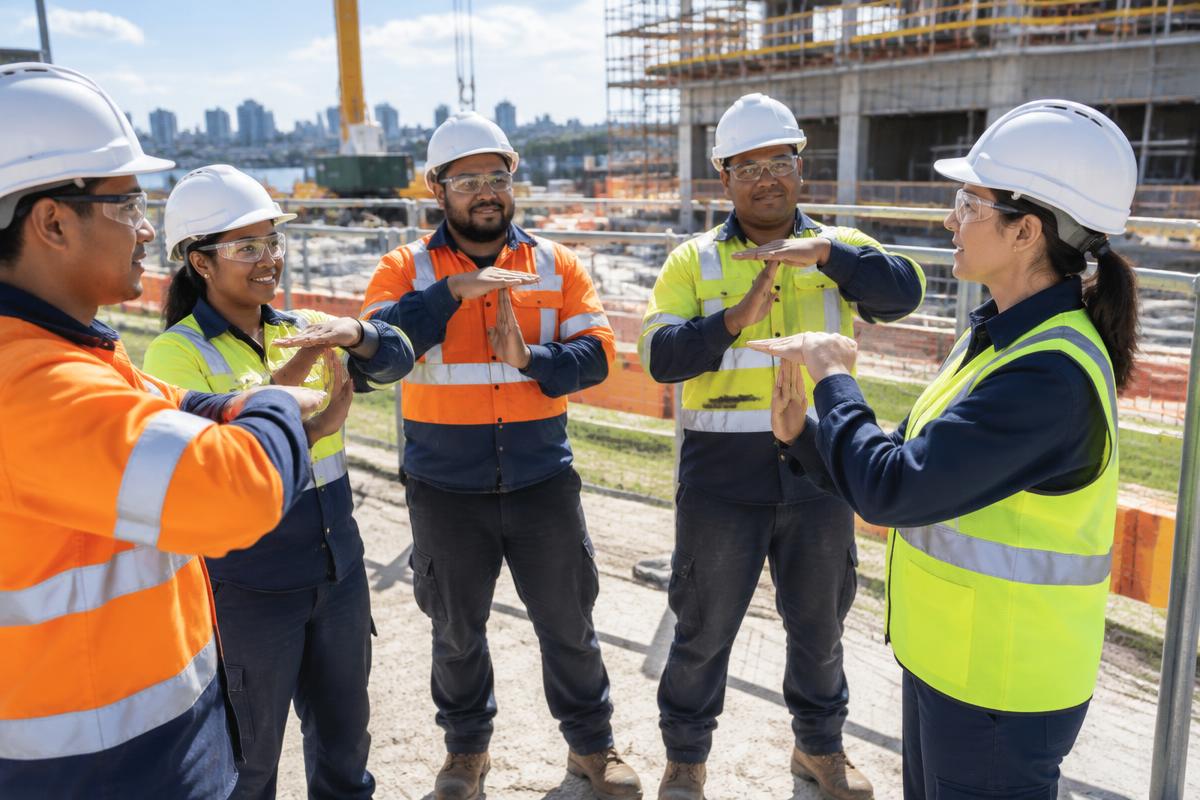
Translation is a starting point—not the whole solution
A document in someone's first language is not automatically accessible. Reading confidence, technical vocabulary, hearing, noise, digital access and familiarity with the task can all change what works. CALD means culturally and linguistically diverse; it describes diversity, not a person's capability or level of English.
Check the meaning
Have safety-critical translations reviewed by someone suitably qualified. Check local terms and equipment names. Do not rely on unreviewed automatic translation for an instruction where a mistake could cause harm.
Offer more than one format
Pair plain language with images, demonstration and audio where useful. Ask workers which format helps them. Avoid assuming everyone from the same country has the same language, literacy or learning preferences.
Protect private conversations
For sensitive matters, consider qualified language support and explain confidentiality and its limits. Do not automatically ask a supervisor or colleague to interpret a complaint about their own team.
Turn a good intention into everyday practice
Start with one crew and a task that matters. This suggested rollout is a planning aid, not a legal deadline: urgent or uncontrolled risks need action immediately.
First: listen and map the gaps
Speak with workers, health and safety representatives and supervisors. Identify the languages and formats people prefer, then walk through induction, pre-starts, task changes and reporting. Include contractors, night shifts and new arrivals. Choose a safety-critical task to improve together.
Next: trial the communication
Review the approved task information, arrange appropriate translation or interpreting, and test visuals with the people who will use them. Give supervisors time to practise show-back. If the trial reveals a missing control, fix the risk rather than simply producing another training module.
Then: review what changed
Record the task, language support, consultation, comprehension checks and unresolved questions. Ask whether workers can now raise concerns and access help. Review after task changes, incidents, workforce changes or feedback; completion rates alone do not establish that a control is working.
Useful evidence: keep the approved material and version, who was consulted, the support provided, what workers demonstrated, and the action owner for remaining gaps. Keep personal information proportionate and protect sensitive reporting.
Where practical, use a multilingual platform such as Flourish360's learning management system for Australian frontline teams to support accessible training and organise learning records. Trial it with your workers: check language availability, audio clarity, mobile access and understanding of the actual task. Software supports the work; it cannot replace consultation, task-specific controls or suitable supervision.
Culture is more than language
Safe Work Australia's guidance for migrant and multicultural workers is clear that translation is only part of the picture. Culture and faith shape how people hear instructions, whether they feel able to question a supervisor, and even how safety equipment fits.
Ask how people prefer to communicate
In some cultures, direct eye contact signals attention; in others it can be read as disrespect. Don't mistake averted eyes or a quiet “yes” for understanding — ask workers how they prefer to communicate, and confirm understanding by demonstration.
Respect faith and practice
Fasting during religious observance can affect energy and concentration on physically demanding tasks — consider break timing and task allocation. Beards and head coverings can affect how some PPE fits; solve it with the worker rather than excluding them from the task.
Never assume from a passport
Country of birth doesn't tell you someone's language, literacy or learning preference. Two workers from the same country may need completely different support. Ask each person — privately — what works for them.
A six-question checklist for supervisors
Print it, put it on the crib-room wall, or run through it at the next pre-start.
- Do I know the first languages of everyone on my crew today?
- Could each worker show me — not tell me — the critical controls for their task?
- Do new starters have a buddy who shares their language, or access to an interpreter?
- Is there a way to report a concern without writing in English?
- Have I told my crew, in words they understand, that speaking up is protected?
- When did I last ask a quiet worker how they're really going?
Helpful free resources: Safe Work Australia publishes safety information in other languages, TIS National provides interpreting services, and the Fair Work Ombudsman explains workplace rights for visa holders in many languages. For sector detail, see our guides to mining, construction, agriculture and manufacturing, and our psychosocial risk assessment toolkit.
Frequently asked questions
What does CALD mean in workplace safety?
CALD means culturally and linguistically diverse. In workplace safety, the term helps employers consider language, cultural context and access to information. It does not mean someone lacks skills or cannot understand English. Ask individuals what support they need rather than making assumptions about their background.
Are CALD workers more likely to be injured at work?
Regulators are concerned that they are. In October 2024, SafeWork NSW issued a safety alert after a rise in serious injuries to culturally and linguistically diverse workers, naming CALD, migrant, labour hire and young workers as the four groups most at risk of being harmed at work. Research using Victorian emergency department data also found injury risk differs between communities — which is why tailored, community-specific safety programs matter more than one-size-fits-all translation.
Is translating a safety induction enough?
Not on its own. Employers need to consider the task, the worker and the risks, provide suitable instruction and supervision, and check understanding. A translated document can help, but demonstrations, visual information, interpreting and ongoing consultation may also be needed. Review communication when tasks or site conditions change.
Do Australian employers have to provide safety information in other languages?
Under the model WHS laws, employers must provide the information, training and instruction workers need to work safely, and consult them in a way they can understand. Safe Work Australia's codes of practice say this should account for workers' language and literacy. That may mean translated material, interpreters, visual methods or demonstration — whatever actually works for your people.
Is a language barrier a psychosocial hazard?
Language itself isn't listed as a hazard, but it shapes several that are: poor support, lack of role clarity, poor workplace relationships, remote or isolated work and harassment. It also makes it harder to detect and report harm. Employers should consider language and culture when identifying and assessing psychosocial risks.
See the psychosocial hazards guideCan a bilingual co-worker act as an interpreter?
For everyday conversations it can help, but it isn't a substitute for a qualified interpreter on high-stakes matters such as inductions, incident investigations, performance or wellbeing discussions. It can put unfair pressure on the co-worker and risks mistakes or loss of confidentiality.
Do visa holders have the same workplace safety rights?
Yes. Workplace health and safety and workplace rights in Australia apply to all workers, including temporary visa holders. The Fair Work Ombudsman provides information for visa holders and migrant workers in multiple languages.
Which industries does this affect most?
Any workplace with a culturally and linguistically diverse workforce, but it is especially pressing in high-risk sectors such as mining, construction, agriculture, manufacturing, transport and logistics, and meat processing — where a misunderstood instruction can cause serious harm.
This article is general information, not legal advice. Check your regulator's current guidance for your situation. Illustrations are AI-generated.
Every worker understood. Every voice heard.
Flourish360 is enterprise software that gives frontline crews voice-first, multilingual training and a safe way to speak up — while giving you the psychosocial risk evidence the law expects.